

🤓 ChatGPT’s New Image Tool Makes Holiday Photos More Fun
PLUS: Your holiday reading list

It’s the last working Friday of the year.
Whether you’re wrapping up projects, wrapping gifts, or just trying to wrap your head around the fact that it’s already December 19th—I hope you find a few minutes this week to do something just for fun.
I did.
I turned myself into a Christmas ornament. And it only took ~45 seconds.
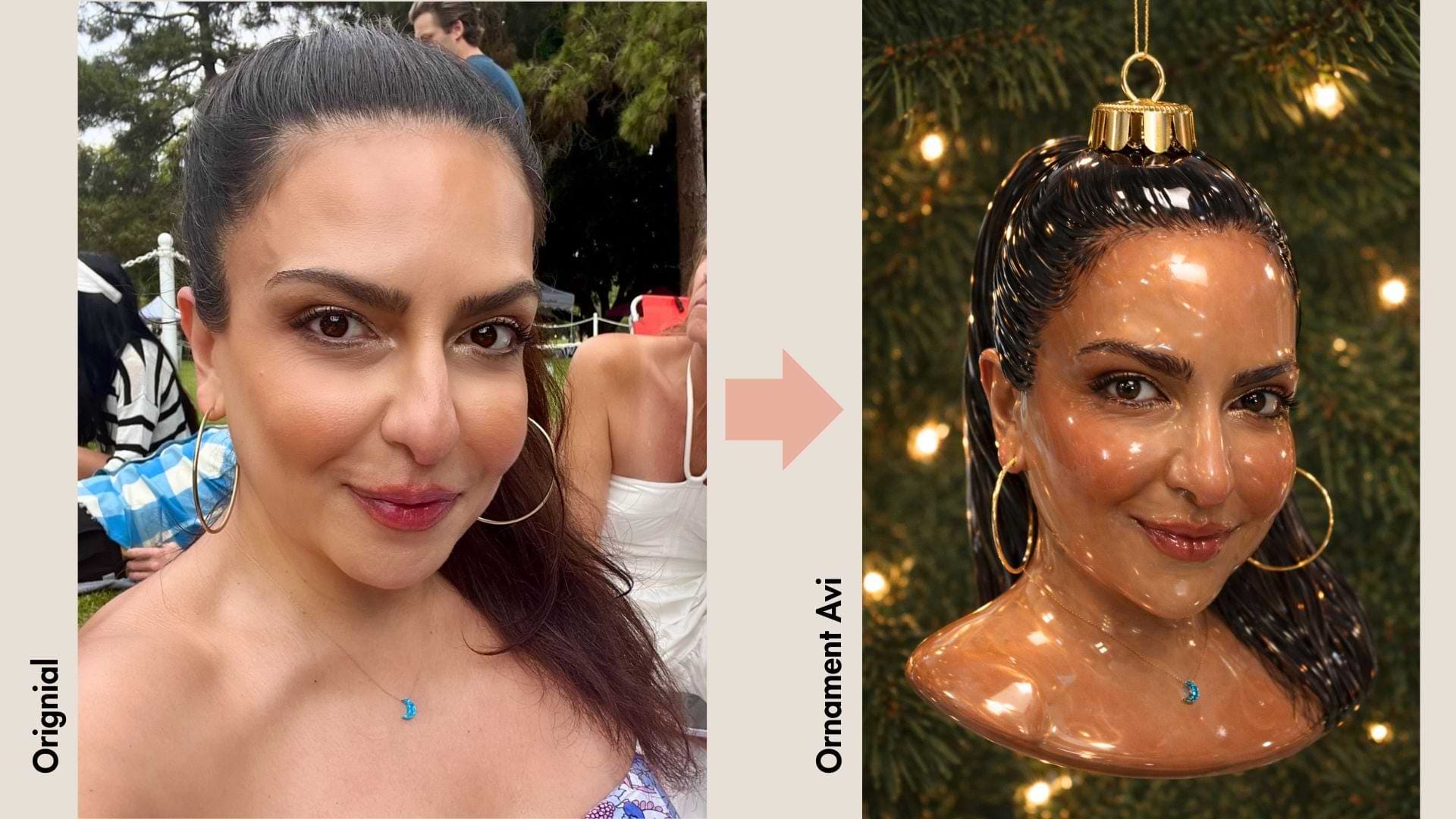
I uploaded a photo, clicked the “Ornament” preset, and… there she is.
Shiny, festive, and the closest I’ll ever get to being a collectible.
The model kept my face, my earrings, even the necklace—just made me look like I was blown from glass.
This is OpenAI’s new ChatGPT Images upgrade in action.
The new model (GPT Image 1.5) is faster and better at following detailed instructions.
OpenAI says it is also much better at making precise edits—changing only one element while keeping others like facial likeness, lighting, and background consistent.
That’s a deceptively hard thing for image models (they often “fix” the one detail while changing other elements you wanted to keep the same). This is a capability Google’s Nano Banana Pro has also been positioning as a strength.
You can restore an old photograph. Or turn yourself or any object into a Christmas ornament, a sugar cookie, or a plushie without knowing how to write a single prompt.
Upload a photo. Pick a style. Done.
There’s now a dedicated Images space in ChatGPT with preset filters, styles, and prompts to jump-start ideas.
It also saves every image you generate in a ‘My images’ gallery, so everything’s in one place.
That’s the fun part.
The strategic part is that OpenAI continues to move ChatGPT toward more useful, personalized, visual, interactive experiences.
We’ll come to that.
But first, I had to try one more thing.
I Restored a Childhood Photo of My Sister
This is my adorable sister.
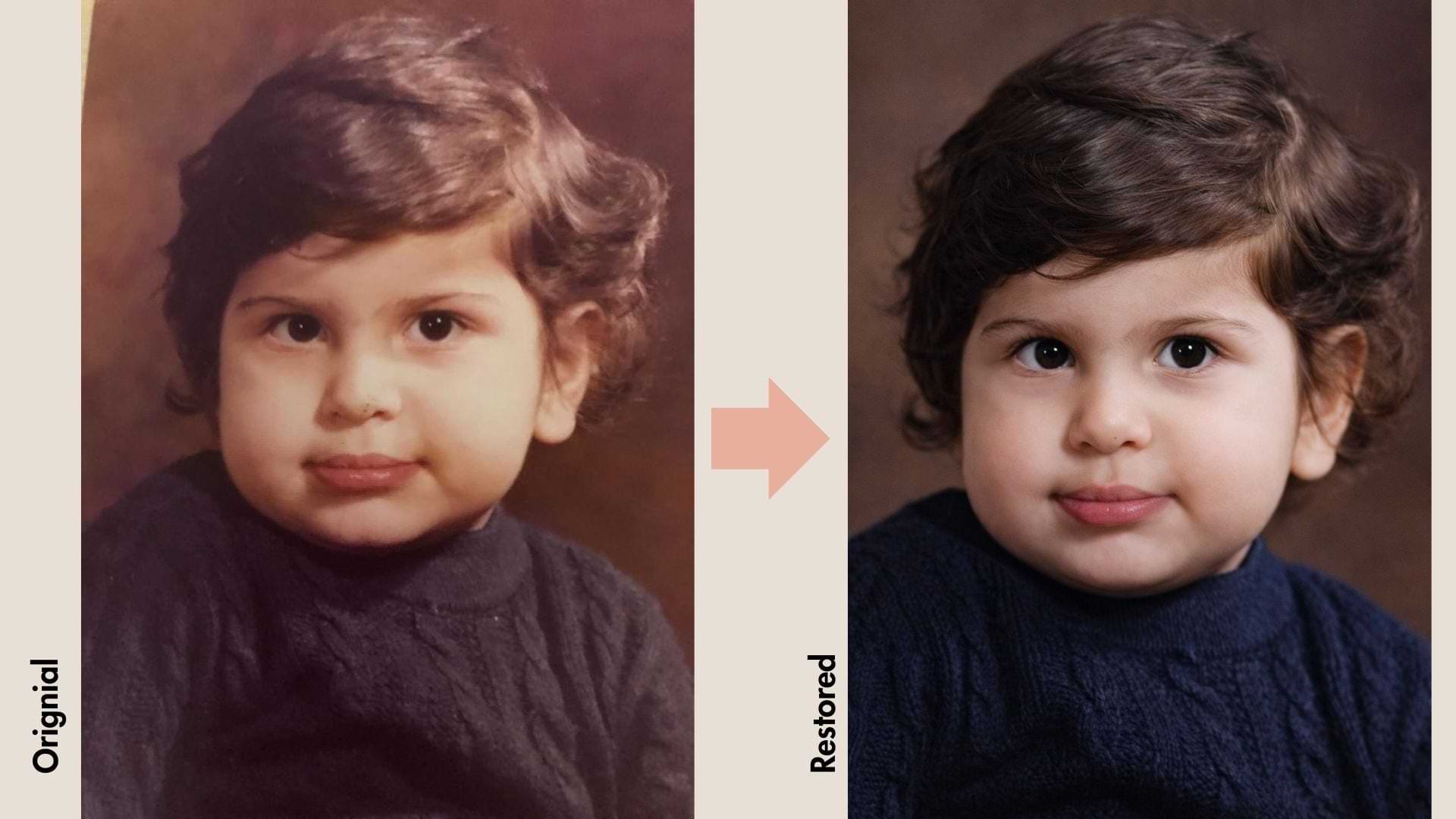
The original is an old print—faded, a little soft. I uploaded it, selected “Restore old photo,” and ChatGPT sharpened the details, fixed the lighting, and kept her expression exactly as it was.
It looks like it came from a modern portrait studio.
This one’s getting framed.
My mother has been asking for updated photos for approximately three years.
Technically, I’m now delivering.
Here’s How It Works
If you want to try this yourself:
Find the new Images tab
Look for it on the left side of the screen—it sits right below “ChatGPT” and above any custom GPTs you’ve created. On mobile, you’ll find it in the sidebar.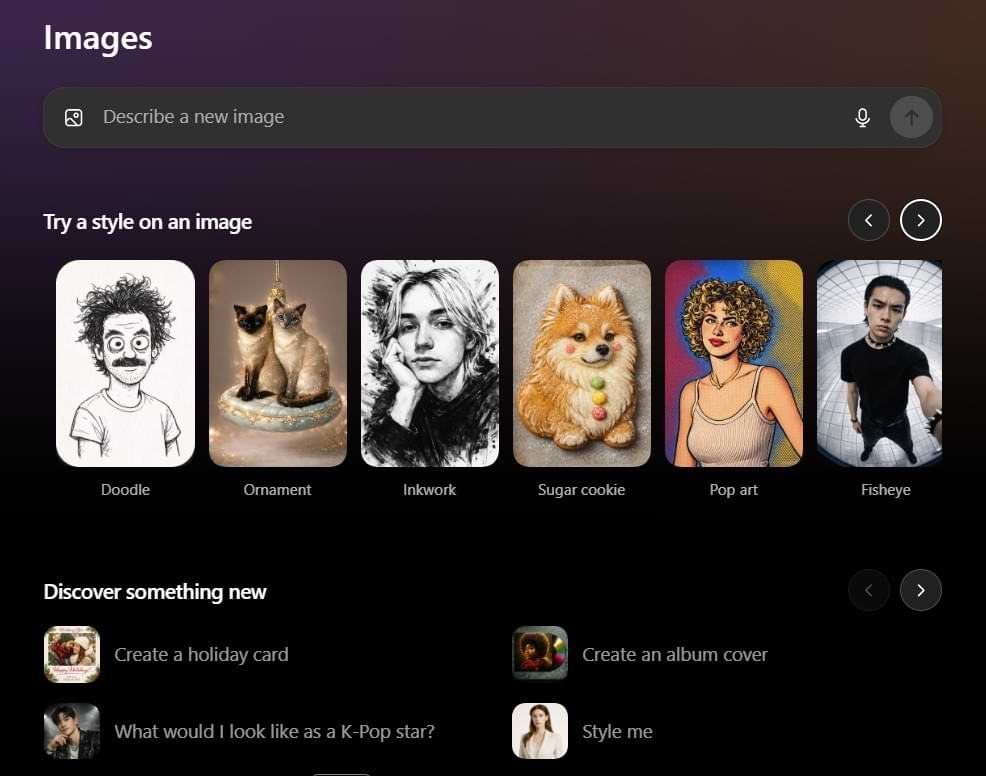
Browse the presets
You’ll see a row of style options: Doodle, Ornament, Inkwork, Sugar Cookie, Pop Art, Fisheye, and more. Each one has a pre-written prompt behind it that does the work for you.Upload a photo
Most presets require you to start with an image—upload yours, pick a style, and hit go.Regenerate or iterate
Each generation is slightly different. If the first result isn’t quite right, regenerate in a new chat for variations (it often takes me a few attempts to get something I like). Or give the model more specific direction. It improves with feedback.See, steal and tweak the prompt.
Once you generate with a preset, you can see the prompt that created it. You can adjust it to your preferences and then regenerate.This is available to everyone, including free users.
So How Does GPT Image 1.5 Compare with Google’s Nano Banana Pro?
I’ve only had a few days with the new model, but here are my early impressions.
Google’s Nano Banana Pro
💠 Stronger world model → better grasp of real-world concepts and the relationship between objects in a scene
💠 Leans more “studio” → better at executing specific camera angles, depth of field, cinematic lighting
💠 Feels like the image was captured by a camera—not generated by AI
💠 Produces ultrarealistic results, especially with good prompting
You can see examples of the realistic images I created with Nano Banana Pro in this edition.
OpenAI’s GPT Image 1.5
💠 Easier to use → includes click-and-go presets with built-in styles and filters—no need to know how to prompt for basic use
💠 Faster to generate results
💠 More accessible → available to all users, including free tier, with higher daily usage caps
A more advanced version of this image model is expected to launch early next year—likely the one that will be used to generate Disney characters under OpenAI’s new partnership with Disney.
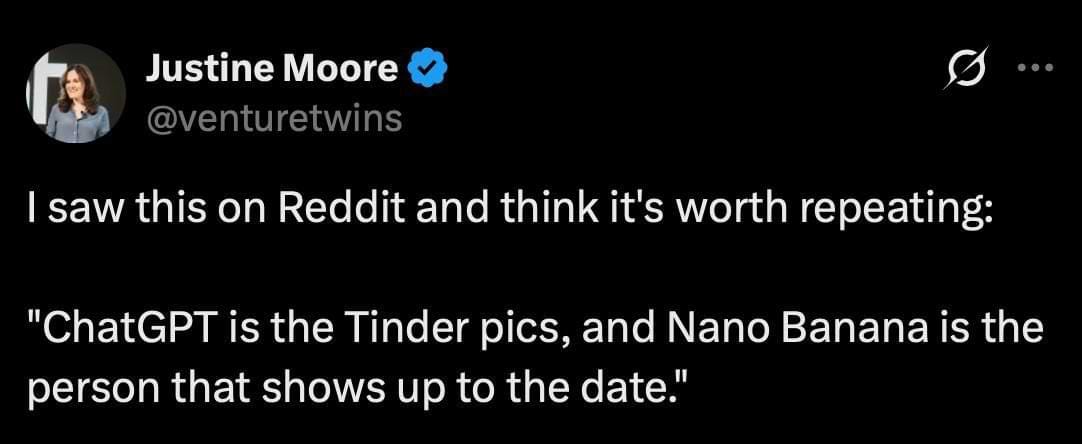
This tweet 👇 pretty much nails the model comparison:
Why This Matters (Beyond the Fun)
Okay, yes—turning yourself into an ornament is delightful.
But there’s something bigger happening here.
Fidji Simo, OpenAI’s CEO of Applications (and former Instacart CEO), published a piece this week about where ChatGPT is headed:
Humans don’t just think in words. In fact, some of our most compelling ideas often begin as images, sounds, movements, and patterns in our minds. For AI to help us reach our full potential, it needs to communicate in ways that match how we naturally absorb and process the world.
She describes a shift from text-based answers to more visual, interactive experiences.
AI that doesn’t just respond, but shows you things.
Answers that highlight people, places, and products you can tap to explore. Information designed to be absorbed at a glance.
Below is an image from Simo’s post about what we can expect.
Hello Google. 😉
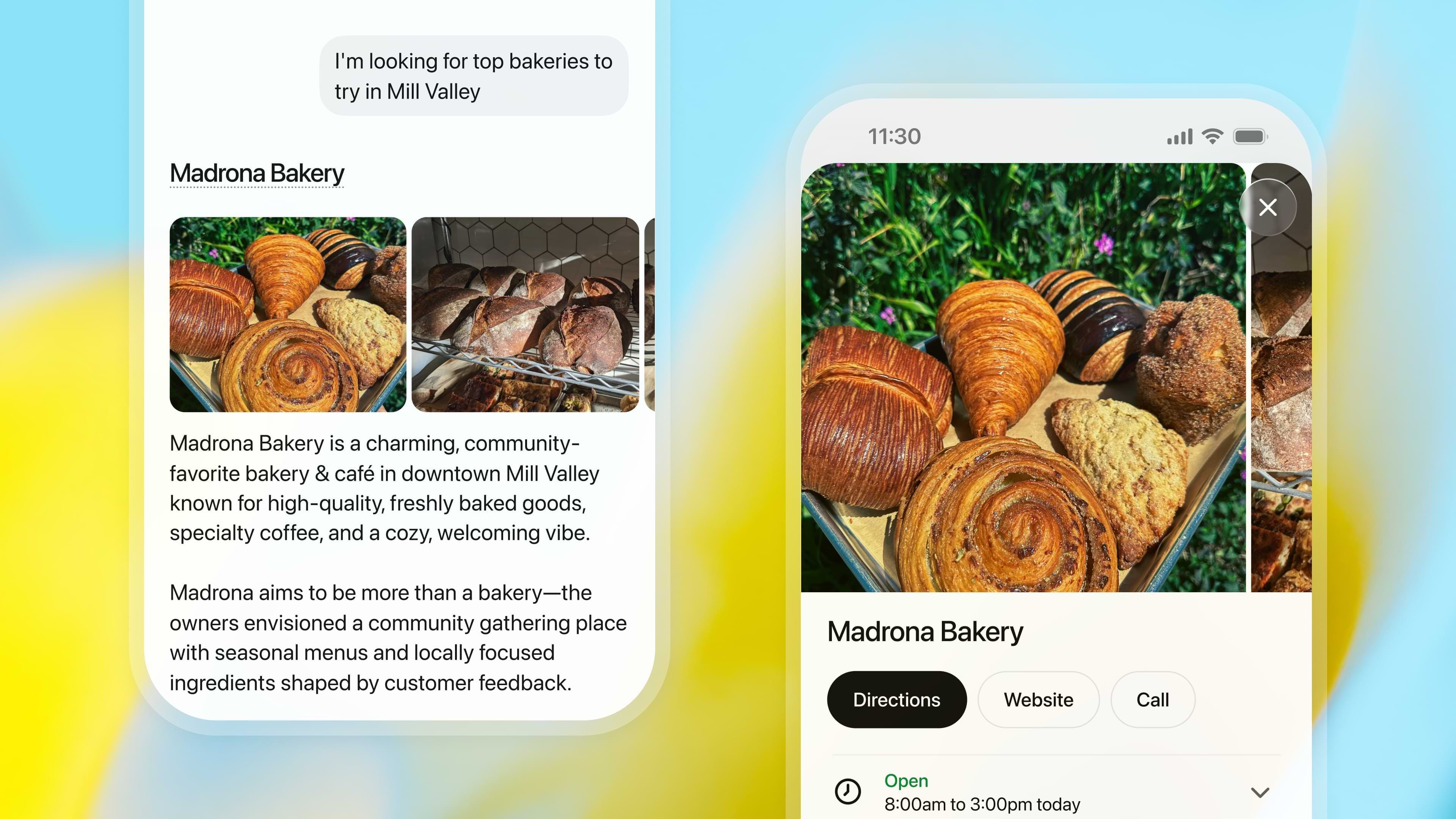
We’re not there yet with ChatGPT, but likely only a few weeks away.
The Images upgrade is a creative tool. But the same model that powers it will also power the new interactive experiences on ChatGPT.
Google is already doing this in AI Mode for its paid users.
When you ask a question, it generates charts, comparisons, and interactive visual layouts on the fly directly into search results.
I wrote about this a few weeks ago. If you haven’t read that piece yet, I’d make time for it, especially if you work in brand strategy, marketing, PR or comms. 👇

Ultimately this shift is about who controls the front door when someone is searching, comparing, and deciding what to read, watch or buy.
If that front door is ChatGPT, Google, or Perplexity, your content and owned channels (website, socials, YouTube channel) still matter—but the AI companies own the framing, discovery, and the relationship with the audience.
📈 Work with Me
AI Advising and Consulting: Strategic guidance to build sustainable AI strategies and adapt to shifting audience behavior
AI Training: Practical training that helps teams use AI more strategically, effectively, and safely—so it becomes a trusted thought partner, not just a task assistant
Holiday Reading (If You’re Looking for It)
If you’re newer here—or you missed a few editions while life did what it does—here’s a reading list for the holidays.
Consider it your insurance policy against nodding blankly when someone mentions autonomous AI agents at your next party.
Pour a glass of wine or a cup of tea, find a cozy spot, scroll through the blurbs to choose your poison, and dig in.
--
💼 Before your next pitch, interview, or meeting, someone might ask AI about you. LinkedIn is now one of the first places it looks. What are they finding?

--
🖼️ I made fake photos of public figures with Google’s new Nano Banana Pro image model. Then I asked Google’s AI detection system to verify them. It said they were real.

—
🎬 This AI-generated short film shows who’s actually positioned to win in Hollywood’s AI future. Plus, my take on Disney building its own Sora.

—
🤖 AI tools and agents are now gatekeepers of discovery and recommendation. At 3:37 AM, one subscribed to my newsletter. Here’s what made it choose me, and what it means for you.

—
🧩 AI can cross-check your marketing narrative against reviews, Reddit, and reality in three minutes. If there’s a gap between what you say and what’s true, it gets exposed fast. Plus, what do AI studios need to win?

—
💡 A simple prompting technique can help you improve AI responses, making them more creative, original, and useful across models.

—
🔮 AI can predict what consumers will buy with up to 90% accuracy, and explain the emotional “why” behind it. What will this mean for product development and marketing?

—
🎥 The loudest conversations about AI in Hollywood are missing the most powerful and strategic use: developing smarter strategies that actually move the business forward.

—
🧸 AI companions for kids are emotionally sticky and about to be very profitable. But they’re also risky business. Plus, OpenAI launches everything…basically: upgrades, shopping, a new social media app (Sora), and more.

—
🧠Most of us use AI for productivity, but its greatest value is helping us think better.



This is my last edition of the year.
I’ll be back in your inbox on Friday, January 9th.
Between now and then, I’ll be spending serious time with the wave of new models that launched over the last few weeks.
As I’ve mentioned before, it takes weeks (sometimes months) of testing to better understand each specific model’s capabilities and blind spots. I’ll put in the time and share my insights with you in the new year.
I’ll also try to take a few days off (emphasis on try). My family has been informed this is aspirational, not contractual. 😁
AI companies don’t slow down during the holidays.
So, expect more big launches and announcements before I send out my next edition.
A big story worth following through the next few weeks is the launch of ChatGPT’s app store, which now includes apps from Target, Walmart, Adobe, Instacart, AllTrails, Spotify, and Apple Music among many others. It’s now open to submissions by all brands and developers.
If other big things happen, I’ll likely share them on LinkedIn and Threads. Follow me there if you want to stay in the loop.
Thank you for reading, sharing, and supporting this newsletter in 2025.
We’re still in the very early chapters of this AI story.
The fact that you’re here—and that you make time to read this newsletter week after week, despite everything else on your plate—means you’re building the knowledge and clarity to better navigate what’s coming next.
That’s going to give you a real edge.
I’ve also gotten to work with some of you on the big, messy, exciting questions this year. That’s been a joy.
I’m truly grateful, and excited for what we’ll build and learn together next year.
May your holidays be restful, fun, and full of the people you love.
Stay curious,
Avi
💙💙💙 P.S. A huge thank you to my paid subscribers and those of you who share this newsletter with curious friends and coworkers. It takes me about 20+ hours each week to research, curate, simplify the complex, and write this newsletter. So, your support means the world to me, as it helps me make this process sustainable (almost 😄).